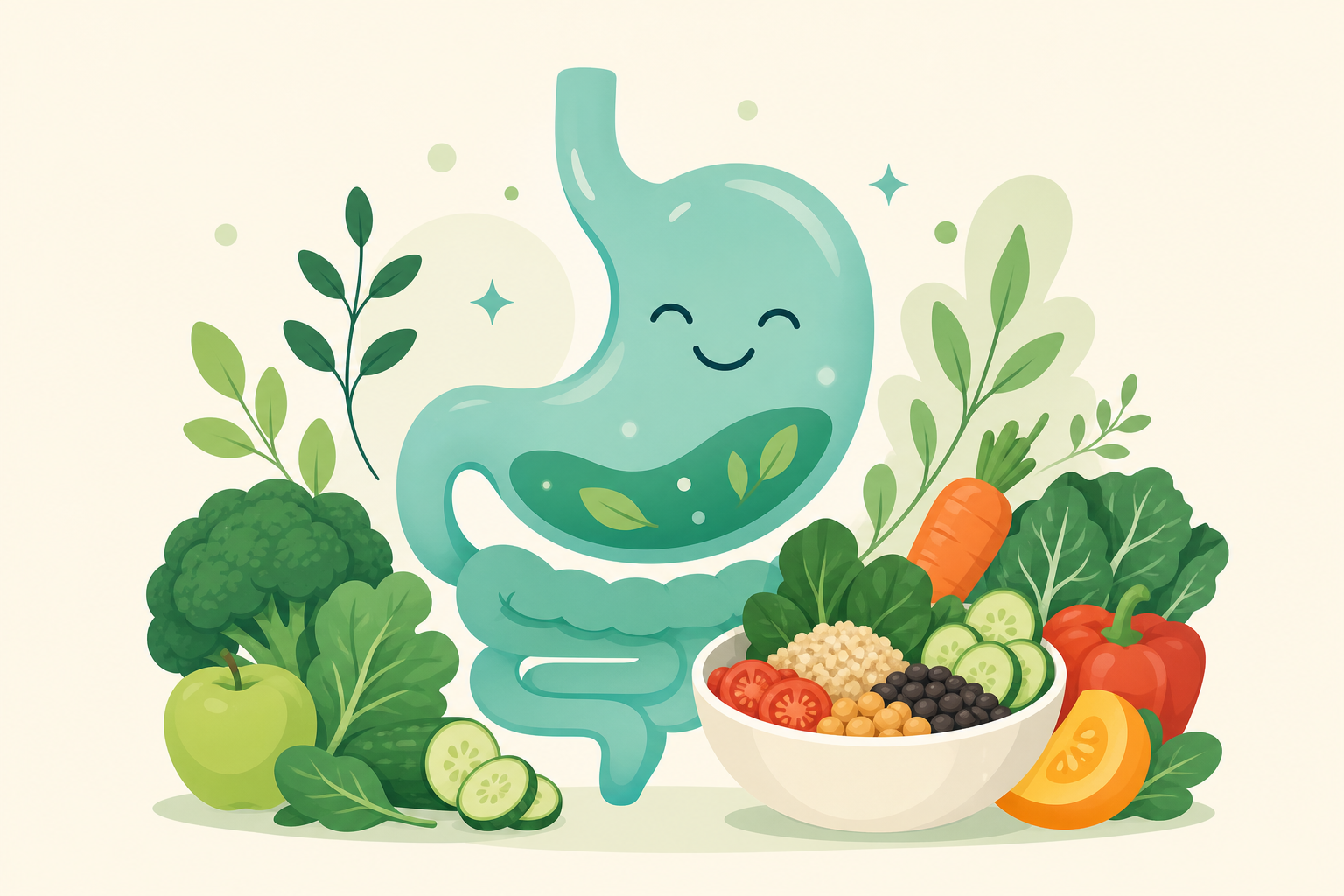
 🍽️ Stomach & Digestive Health
Stomach & Digestive Health: Tips for a Happier Gut
Practical tips to reduce bloating, ease acidity, and support a balanced gut microbiome.
Your digestive system does more than process food — it also plays a major role in immunity and even mood, thanks to its connection with the gut microbiome. A little daily care goes a long way toward avoiding bloating, acidity, and long-term digestive issues.
Why Digestive Health Matters
An estimated large share of your immune system activity is centred around the gut. A well-functioning digestive tract absorbs nutrients efficiently, keeps harmful bacteria in check, and reduces inflammation throughout the body.
Tips for a Happier Gut
1. Eat Slowly and Chew Thoroughly
Digestion begins in the mouth. Eating too quickly can lead to bloating and discomfort because your stomach receives large pieces of food and swallowed air.
2. Add Fibre Gradually
Fruits, vegetables, whole grains, and legumes feed the beneficial bacteria in your gut and keep bowel movements regular. Increase fibre gradually and drink enough water alongside it to avoid bloating.
3. Include Fermented Foods
Yogurt, curd, kefir, and other fermented foods introduce beneficial probiotics that support a balanced gut microbiome.
4. Limit Fried and Very Spicy Food in Excess
Occasional indulgence is fine, but a diet consistently high in fried or extremely spicy food can irritate the stomach lining and worsen acid reflux in sensitive individuals.
5. Time Your Meals Consistently
Eating at roughly consistent times helps regulate the digestive hormones that control hunger and stomach acid release, reducing the likelihood of acidity and irregular bowel habits.
6. Manage Stress
The gut and brain are closely linked through the "gut-brain axis." Chronic stress can trigger or worsen symptoms like bloating, cramping, and irregular bowel movements.
7. Avoid Lying Down Right After Eating
Staying upright for at least 2–3 hours after a meal reduces the risk of acid reflux, especially with heavier or spicier meals.
8. Stay Physically Active
Regular movement stimulates healthy bowel motility and can help relieve occasional constipation and bloating.
Warning Signs Worth Discussing With a Doctor
- Persistent abdominal pain lasting more than a few days
- Unexplained weight loss alongside digestive symptoms
- Blood in stool or vomit
- Chronic heartburn that doesn't respond to lifestyle changes
Frequently Asked Questions
Q: What's the fastest way to relieve bloating? A: Gentle movement like walking, warm water or herbal tea, and avoiding carbonated drinks and very salty food can help in the short term. If bloating is frequent, it's worth reviewing your fibre intake and eating pace.
Q: Are probiotics necessary for everyone? A: Not necessarily — many people maintain a healthy gut microbiome through diet alone (fermented foods, fibre-rich produce). Probiotic supplements can help in specific situations, such as after a course of antibiotics, but aren't essential for everyone.
Q: Is it normal to have acid reflux occasionally? A: Occasional reflux after a heavy or spicy meal is common and usually harmless. Frequent reflux (multiple times a week) is worth discussing with a doctor, as it may need lifestyle changes or treatment.