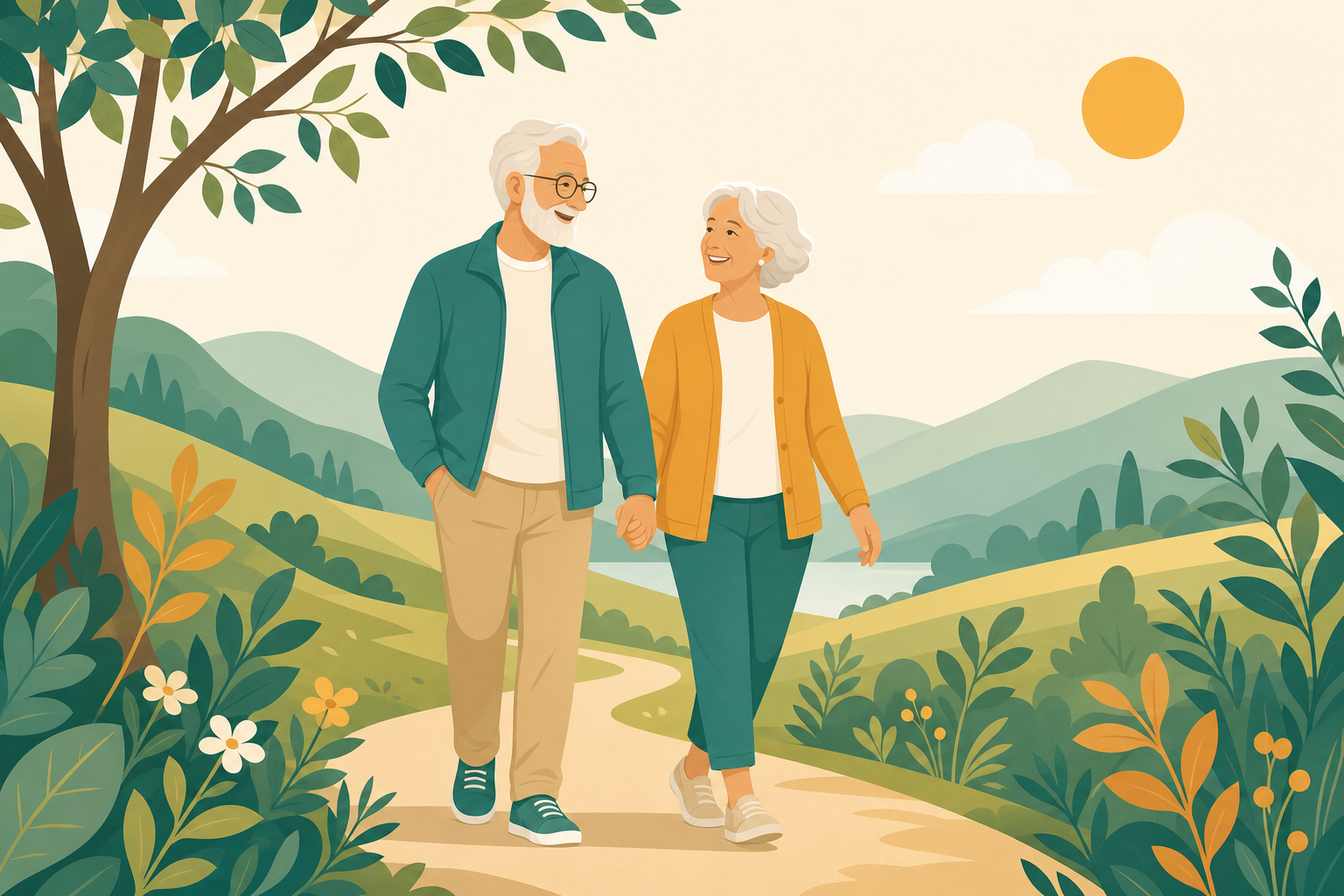
 🧓 Healthy Aging
Healthy Aging: Simple Habits for a Longer, Stronger Life
Strength training, bone health, and social connection — the habits that support independence as you age.
Healthy aging isn't about avoiding getting older — it's about maintaining strength, independence, and quality of life for as long as possible. Many of the biggest factors are well within your control, regardless of age.
Why Healthy Aging Habits Matter
From the 30s onward, muscle mass and bone density gradually decline unless actively maintained. Cognitive sharpness, balance, and cardiovascular health follow similar patterns — habits built now directly shape how independent and active you'll be decades from now.
Habits That Support Long-Term Health
1. Prioritize Strength Training
Resistance exercise — even bodyweight movements or light weights twice a week — helps preserve muscle mass and bone density, both of which decline with age and directly affect fall risk and independence.
2. Keep Moving Every Day
Regular low-impact activity like walking, swimming, or cycling supports heart health, joint mobility, and mood, and is one of the most consistent predictors of healthy aging in long-term studies.
3. Protect Your Bones
Adequate calcium and vitamin D, along with weight-bearing activity, help slow bone density loss and reduce fracture risk — particularly important after midlife.
4. Stay Socially and Mentally Engaged
Strong social connections and ongoing mental engagement — learning new skills, reading, puzzles, conversation — are linked to slower cognitive decline and better emotional wellbeing in older age.
5. Get Preventive Screenings
Regular checks for blood pressure, cholesterol, blood sugar, bone density, vision, and hearing catch age-related changes early, when they're easiest to manage.
6. Reduce Fall Risk at Home
Good lighting, clearing clutter, non-slip mats, and grab bars in bathrooms are simple changes that significantly lower fall risk — one of the leading causes of injury in older adults.
7. Eat for Longevity
Diets rich in vegetables, fruits, whole grains, lean protein, and healthy fats — with adequate protein intake to counter age-related muscle loss — support both metabolic and muscular health as you age.
Signs Worth Discussing With a Doctor
- Noticeable loss of strength, balance, or frequent stumbling
- Unexplained weight loss or loss of appetite
- Increasing forgetfulness that affects daily tasks
- Persistent fatigue that doesn't improve with rest
Frequently Asked Questions
Q: Is it too late to start exercising in your 60s or 70s? A: No — studies consistently show meaningful gains in strength, balance, and mobility even when starting exercise later in life. It's never too late to see benefits.
Q: Do I need more protein as I get older? A: Many older adults need slightly more protein than younger adults to counteract natural muscle loss (sarcopenia). Spreading protein intake across meals, alongside resistance exercise, helps preserve muscle mass.
Q: What's the single best predictor of healthy aging? A: There's no single factor, but staying physically active is consistently one of the strongest — it supports muscle, bone, heart, and cognitive health simultaneously.